
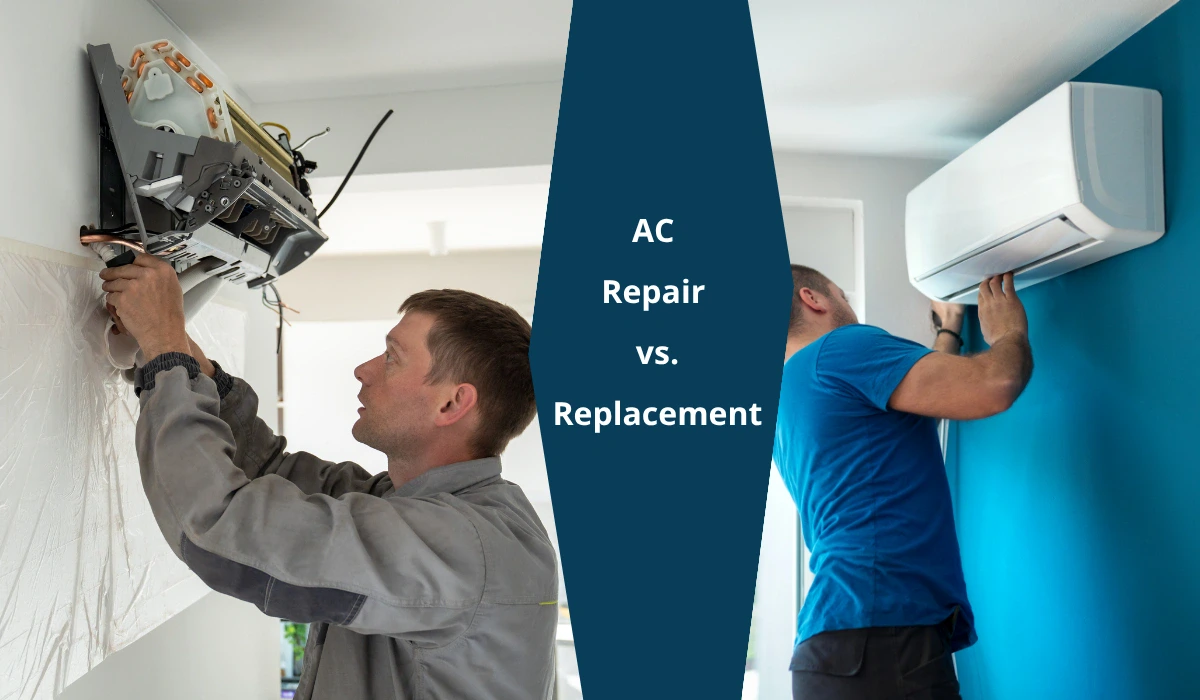
An air conditioning system that no longer performs reliably presents homeowners with a difficult decision.
Should the existing equipment be repaired, or is it more economical to install a new system?
The answer depends on several factors, including the age of the air conditioner, the seriousness of the problem, energy efficiency, and the likelihood of future repairs.
Understanding these considerations can help homeowners avoid unnecessary spending while making a sound long-term investment.
Start With the Age of the Equipment
Air conditioning systems have a limited service life.
Many central air conditioners can operate for approximately 10 to 15 years or longer, depending on equipment quality, maintenance, climate, and usage.
An older system does not automatically need replacement.
However, as equipment ages, component wear and the possibility of mechanical failure generally become more important considerations.
Replacement parts may also become more difficult to obtain for discontinued models.
Homeowners should assess equipment age alongside its actual condition and repair history.
Evaluate the Cost of Repairs
Some air conditioning problems can be resolved relatively inexpensively.
A faulty capacitor, clogged condensate drain, or damaged electrical component may require a straightforward repair.
Other issues, such as compressor failure or extensive refrigerant system damage, may involve substantial expenses.
Before authorizing major work, homeowners should obtain a detailed estimate explaining the problem, the proposed repair, and any applicable warranty.
The repair cost should then be compared with the expense of suitable replacement equipment.
Consider Future Reliability
A successful repair may extend the useful life of an air conditioner considerably.
However, a system experiencing repeated breakdowns may continue generating maintenance expenses.
Homeowners should review how frequently the equipment has required service and whether the failures involve unrelated components.
Repeated problems can indicate broader deterioration.
In such situations, a replacement assessment may help determine whether continued repairs remain financially sensible.
Compare Energy Efficiency
Modern air conditioning systems may offer higher efficiency ratings and improved temperature controls compared with older equipment.
However, savings depend on how frequently the system operates, local electricity costs, and installation conditions.
An efficient replacement may reduce electricity consumption, but the upfront investment should be considered against expected savings.
Homeowners should avoid assuming that every new system will immediately pay for itself.
A realistic comparison includes purchase price, installation expenses, estimated energy use, and maintenance requirements.
Request a Professional Assessment
An experienced technician can evaluate system condition and explain whether repair or replacement is appropriate.
For Fullerton homeowners, Southwest HVAC offers air conditioning services that can help identify equipment problems and assess available solutions.
A useful assessment should include a clear explanation of the fault, estimated repair costs, potential replacement options, and relevant warranty information.
Homeowners can then compare alternatives based on their individual circumstances.
Don't Overlook Installation Quality
If replacement is necessary, selecting appropriate equipment is only the beginning.
The installation must account for cooling load, airflow, ductwork, electrical requirements, and the home's existing configuration.
Improper sizing can create comfort problems and undermine the efficiency benefits of new equipment.
A professional load calculation helps determine the correct system capacity.
Homeowners should also confirm the scope of installation work and any applicable permit requirements before proceeding.
Think About Total Ownership Costs
The least expensive immediate option is not always the best long-term investment.
A low-cost repair may be preferable when equipment is relatively new and otherwise reliable.
Replacing an aging system with recurring expensive problems may offer better long-term value.
The decision should consider expected equipment life, potential future repairs, electricity costs, and the household's available budget.
Final Thoughts
Choosing between air conditioner repair and replacement requires more than comparing two price quotes.
Homeowners should evaluate system age, mechanical condition, operating efficiency, and expected reliability.
A professional assessment, combined with realistic financial planning, can help identify the solution that provides the best balance between comfort and long-term value.